
%201%20(1).png)
Book Now
Start your journey to better health. Select your location below.

Start your journey to better health. Select your location below.
Writers and artists have been chasing isolation forever. Cabins. Monasteries. Hotel rooms with the curtains drawn.
The creative mind needs somewhere to go that isn't the rest of life. A float tank might be the most direct version of that anyone's built.
An hour in a float tank removes almost everything competing for your attention. No phone. No light. No sound. No sense of gravity or temperature. What's left is your own mind, and a lot of room for it to move.
Creativity tends to surface when the brain stops gripping. Float tanks build that condition on purpose, and the mechanisms are well understood.
As sensory input falls away, brain activity slides toward theta: the slow, loose wave pattern that sits between waking and sleep. Theta is the state most people only catch in the shower or in the moment before they drift off, when ideas arrive sideways. A float holds you there for the better part of an hour, awake enough to notice what comes up.
When you stop processing the outside world, the brain's default mode network takes over. That's the network behind mind-wandering, memory, and the loose associations that connect two unrelated ideas into something new. Divergent thinking, the engine of creative work, runs on exactly this.
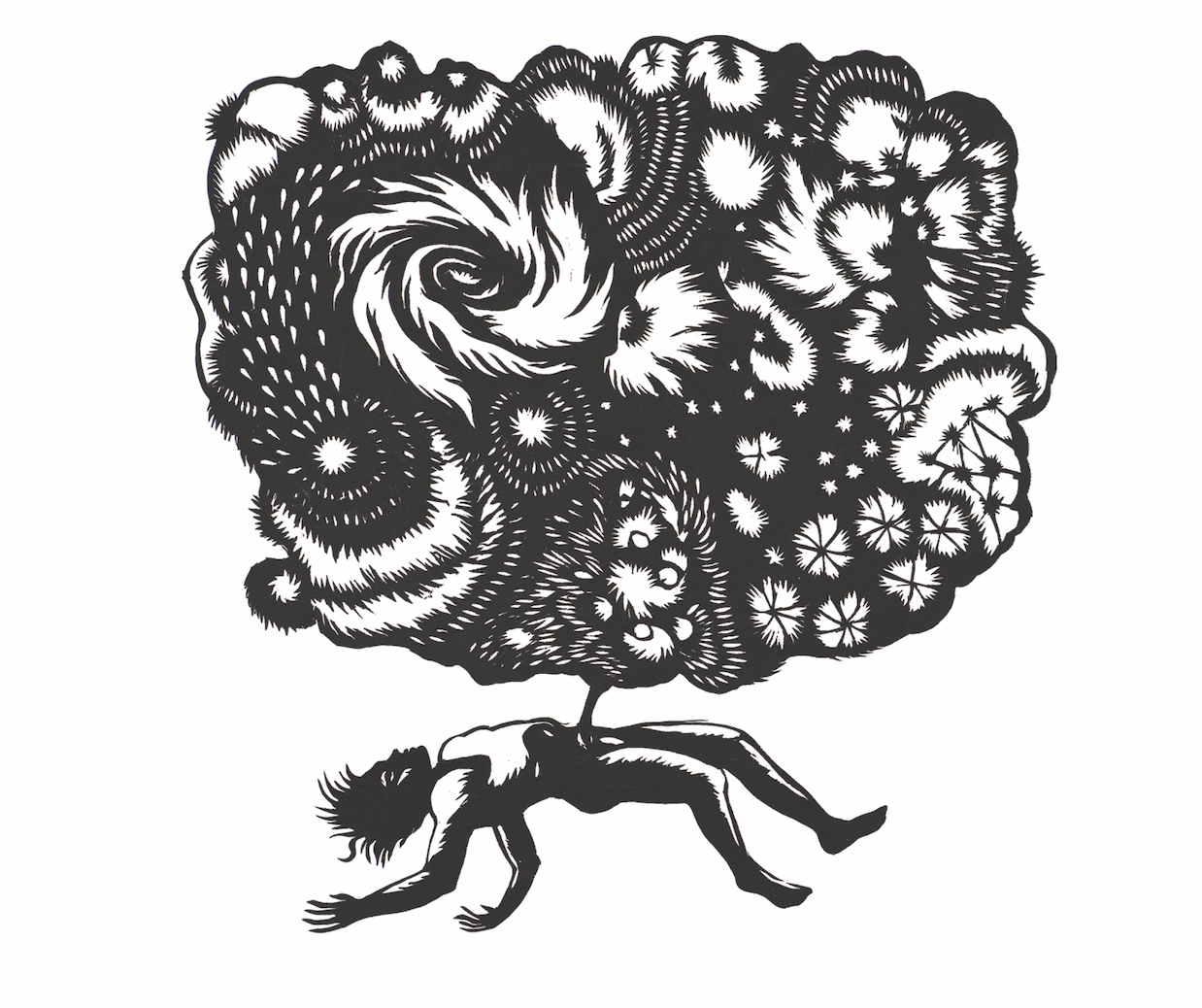
Your senses are expensive. Sight, sound, touch and balance burn cognitive resources every second they're switched on. Take them away and that bandwidth goes somewhere. For most people it goes straight to whatever they've been quietly stuck on.
Step away from a problem and the unconscious keeps working it. Psychologists call this the incubation effect, and it's why solutions arrive in the shower instead of at the desk. A float is a controlled, hour-long version of stepping away, with nothing to pull you back out.
Cortisol and adrenaline narrow thinking down to the next threat. Across a float, both drop. A calm nervous system makes wider, stranger, more original connections, which is the raw material of good creative work. Flotation-REST research going back to Peter Suedfeld and colleagues has linked the float state to gains in originality and creative problem-solving.
Put it together: fewer distractions, a looser brain state, a quieter nervous system, and time for ideas to connect. That's the creative environment a float tank builds, every session.
So we're putting it to the test. A small program at Beyond Rest, open to creatives across our centres.
The deal: 3 free 60-minute floats over 3 weeks. You make something in your medium (a track, a painting, a poem, a short film, anything) that wouldn't have existed without the floats.
Two short videos on your own socials. One mid-program about what you're working on. One at the end with the finished piece. Both tag @beyond.rest.
That's it.
We're picking based on the work itself. A brilliant unknown poet beats a mid-tier influencer with 50k followers, every time.
Pick your location and apply through the form. Each form carries the local detail: which centre, the handle to tag, and the closing date.
Fine. That's most of you reading this. But if any of the above made you think "I've been stuck on something" (a project, a decision, a piece of writing), that's what the tank is for.
An hour with no phone, no input, no noise. That's the whole thing.
If it's been a while, come back in. If you've never tried it, here's your opening. Book a float in Melbourne or Perth.
Hope to see what comes out of this.
Nick, Beyond Rest